
Sewage Cleanup, Handled With the Containment It Demands
Backflow and blackwater need more than a mop. We isolate, remove, and sanitize with full protective protocol.
Email Us for a Free Estimate
Sewage Backup Risk in Older Oakville Infrastructure
Parts of Oakville's older sanitary infrastructure combine storm and sanitary flow in ways that can back up into basements during heavy rain events, a pattern that's more common in established neighbourhoods than in newer subdivisions built to current separated-sewer standards. When that backup happens, it's not just water damage, it's a contamination event that needs to be treated differently from the start.
Combined Sewer Backup
Older sections of the municipal system can surcharge during intense rain, pushing wastewater back through floor drains.
Sanitary Line Blockages
Tree roots and aging clay pipe on older properties are a common cause of backups unrelated to weather.
Sump Pump Discharge Failures
A failed check valve can allow sewage-contaminated water to re-enter a basement after a pump cycle.
Cross-Contamination Risk
Blackwater spreads bacteria quickly across porous materials like carpet underlay and drywall.
This Isn't a Job for Standard Cleanup
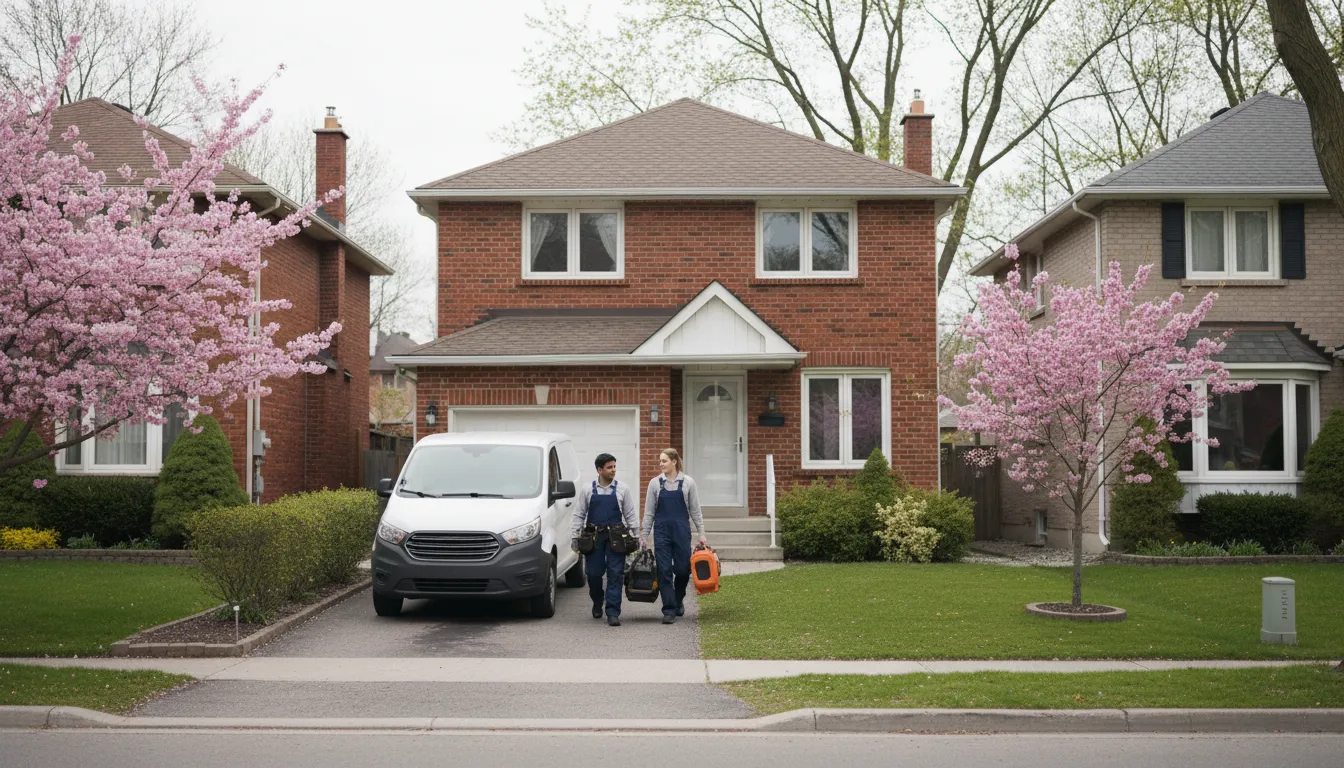
Blackwater carries bacteria and contaminants that regular water damage doesn't. Treating it like a normal flood, without containment and proper PPE, risks spreading contamination into unaffected parts of the home and puts anyone nearby at unnecessary risk.
Containment First, Every Time
We isolate the affected zone before work begins, use full PPE throughout removal, and document what materials were disposed of and how. Porous materials that can't be safely sanitized are removed rather than treated, and that decision is explained in your written scope.
Sewage Cleanup Process
Containment-driven from the first step to the last.
- 1
1. Zone Containment
Barriers go up before any equipment enters, keeping contamination from spreading further.
- 2
2. PPE-First Removal
Crews work in full protective gear to remove blackwater and contaminated debris safely.
- 3
3. Disposal Documentation
Every removed material is logged so you have a written record of what left the property.
- 4
4. Sanitizing & Deodorizing
Remaining surfaces are cleaned and treated to address both contamination and odour.
Why Containment Discipline Matters
Sewage cleanup punishes shortcuts. We don't take them.
Full PPE Standard
Not optional, not situational. Every sewage job gets full protective equipment.
Documented Disposal
You get a written log of what was removed, which matters for both insurance and peace of mind.
Contained Work Zones
Barriers prevent cross-contamination into unaffected rooms.
Fast Response
The longer blackwater sits, the more it spreads. We prioritize sewage requests accordingly.
Clear, Direct Communication
We tell you plainly what can be sanitized and what needs to be removed.
GTA-Wide Availability
Contained response across Halton, Peel, York, Durham, and Toronto.
Sewage Cleanup FAQs
Is it safe to be in the house during a sewage backup?
We recommend keeping the affected area sealed off and avoiding contact with contaminated water until our crew has contained the zone and begun removal.
What happens to carpet or drywall touched by sewage?
Porous materials exposed to blackwater typically can't be safely sanitized and are removed as part of the scope, which we'll explain clearly before work proceeds.
Do you handle the plumbing issue causing the backup too?
We focus on cleanup and restoration, and can coordinate with a plumber for the underlying line or valve issue if needed.
How do you prevent odour after a sewage cleanup?
Sanitizing and deodorizing are standard parts of the scope, applied to every surface that was exposed.
Will this be documented for my insurance claim?
Yes, disposal and cleaning steps are logged in writing, which is typically required for sewage-related claims.
Sewage Backup Needs Containment, Not Delay
Email us the details and we'll walk you through safe next steps.
Email Us for a Free EstimateWeather drives water-damage risk — email us if you find water.
Fall water-damage conditions in Oakville, ON
Fall rain around Oakville, ON tests gutters, sump pumps, and foundations; catching leaks and seepage early prevents the slow water damage and mold that surface over winter.
Proudly Serving Oakville, ON
Local, on-time service throughout Oakville and the surrounding area.